

Custom Torsion Spring Manufacturer
Precision-engineered torsion springs designed for reliable rotational force and long-term performance.
OmniCoil Spring Works Inc. manufactures custom torsion springs for OEMs, manufacturers, and industrial applications across North America and international markets. From prototype development to high-volume production, our torsion springs are manufactured to deliver reliable rotational force, consistent torque performance, and long-term durability in demanding operating environments.
✅ ISO 9001: 2015 Certified
✅ Custom Designed Springs
✅ Prototype to Production
✅ Made in Canada
Custom Torsion Springs Engineered for Reliable Rotational Force
Torsion springs are precision-engineered coil springs designed to generate rotational force, or torque, when their legs are rotated around their axis. They are commonly used in mechanical assemblies where controlled movement, return force, or rotational resistance is required.
At OmniCoil Spring Works Inc., we manufacture custom torsion springs built to your application's specific requirements, including torque output, dimensional constraints, operating conditions, and production needs. From prototype development to high-volume OEM manufacturing, our experienced team delivers reliable torsion spring solutions built for consistent performance, durability, and long service life.
Why Choose Custom Torsion Springs?
Every application has unique mechanical requirements. Custom torsion springs are designed to meet specific performance objectives by balancing dimensions, materials, torque requirements, and configuration options.
Key Benefits
-
Designed for your required torque and motion requirements
-
Custom leg configurations for precise installation
-
Wide range of materials and finishes available
-
Optimized for durability and fatigue resistance
-
Suitable for prototypes, short runs, and production volumes
-
Engineered for OEM and industrial applications
Common Applications
-
Automotive mechanisms
-
Industrial equipment
-
Agricultural machinery
-
Automation systems
-
Medical devices
-
Aerospace components
-
Defence applications
-
Packaging equipment
-
Hinges and counterbalance systems
-
Consumer products
Designed Around Your Application
The performance of a torsion spring depends on more than size alone. Factors such as required torque, rotation angle, leg configuration, installation space, operating environment, and cycle life all influence the final spring design.
Whether you need a replacement torsion spring, a new product development solution, or a production-ready OEM component, OmniCoil works with your team to manufacture torsion spring solutions that meet your specific performance, dimensional, and application requirements.


Torsion Spring Design Fundamentals
Understanding How Torsion Springs Generate Rotational Force
Torsion springs are designed to resist rotational movement by storing mechanical energy when their legs are rotated around their axis. When the applied force is released, the spring returns toward its original position, producing a controlled rotational force known as torque.
Unlike compression and extension springs, which primarily operate through linear movement, torsion springs are designed for applications requiring angular motion, controlled rotation, and return force.
At OmniCoil Spring Works Inc., every custom torsion spring is designed and manufactured with key performance factors in mind, including torque requirements, rotation angle, material properties, operating conditions, and expected cycle life.

Torsion Spring Design Fundamentals
Design Factor | Impact |
|---|---|
Wire Diameter | Determines strength and torque capacity |
Coil Diameter | Influences flexibility and stress levels |
Number of Coils | Affects spring rate and available rotation |
Leg Length | Controls installation and force transfer |
Material Selection | Determines strength, fatigue resistance, and temperature capability |
Operating Angle | Affects torque output and service life |
Manufacturing Tolerance | Ensures consistent performance |
Key Torsion Spring Design Parameters
Torque
Torque is the rotational force produced by a torsion spring. It determines how much turning force the spring applies when rotated through a specific angle.
Proper torque selection ensures the spring provides enough force to operate the mechanism without creating excessive stress or premature failure.
Angular Deflection
Angular deflection refers to the amount of rotation applied to the spring from its unloaded position.
The required operating angle directly influences:
-
Torque output
-
Spring stress
-
Fatigue life
-
Overall performance
Spring Rate
The torsion spring rate defines how much torque increases as the spring is rotated further.
A properly designed spring provides predictable torque throughout its operating range, ensuring smooth and reliable mechanical movement.
Leg Configuration
The legs transfer rotational force from the spring body to the application.
Leg design affects:
-
Installation method
-
Force direction
-
Load distribution
-
Operating efficiency
Common configurations include:
-
Straight legs
-
Tangential legs
-
Offset legs
-
Custom formed legs


Winding Direction
Torsion springs are manufactured with specific winding directions:
-
Right-hand wound
-
Left-hand wound
The correct winding direction ensures the spring applies force in the required rotational direction.
Coil body Design
The coil body determines the spring's mechanical characteristics, including:
-
Wire diameter
-
Coil diameter
-
Number of coils
-
Body length
-
Material strength
Small changes in coil geometry can significantly affect torque output and fatigue performance.
Torsion Spring Types & Leg Configurations
Single Torsion Springs
The most common torsion spring design, featuring a single coil body with two legs that generate rotational force when deflected.


Ideal For:
✓ Hinges
✓ Mechanical linkages
✓ Latches
✓ Industrial equipment
Tangential Leg Configuration
Legs extend tangentially from the coil, providing efficient force transmission and smooth rotational movement.

Ideal For:
-
Machinery
-
Automotive components
-
Precision equipment
Custom Leg Configurations
When standard leg styles don't meet your design requirements, OmniCoil can manufacture fully customized leg geometries based on your drawings, CAD files, or engineering specifications.

Custom Options Include:
-
Special leg angles
-
Custom bends
-
Multiple leg lengths
-
Formed ends
-
Application-specific designs
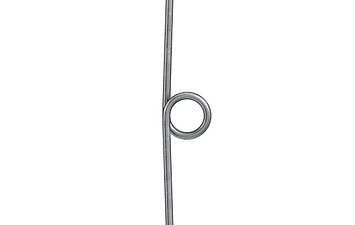
Straight Leg Configuration
A simple and versatile leg design used when direct force transfer and easy installation are required.

Ideal For:
-
General mechanical assemblies
-
Industrial equipment
-
Consumer products
Offset Leg Configuration
Legs are formed at specific angles or offsets to accommodate limited installation space or specialized mounting requirements.

Ideal For:
-
Compact assemblies
-
Custom equipment
-
OEM applications
Choosing the Right Leg Conf.
Our experienced team provides application guidance and spring design support to help identify the most suitable torsion spring configuration for reliable performance and long service life.


Engineering Factors to Consider:
-
Required torque
-
Direction of rotation
-
Available installation space
-
Mounting method
-
Angular travel
-
Cycle life
-
Assembly requirements

Torsion Spring Materials
Selecting the Right Material for Strength, Fatigue Life & Performance
Material selection plays a critical role in the performance and longevity of a torsion spring. The appropriate material influences torque capacity, fatigue resistance, corrosion resistance, operating temperature capability, and overall service life.
At OmniCoil Spring Works Inc., we manufacture custom torsion springs using a wide range of premium spring materials to meet the demands of industries ranging from automotive and industrial manufacturing to medical, aerospace, defence, and oil and gas applications.
Our experienced team provides material selection guidance based on application requirements, operating conditions, and performance expectations to help achieve reliable torsion spring performance.
Torsion Spring Material Comparison
Material Name | Strength Rating | Corrosion Resistance Rating | Max Operating Temperature | Typical Application | Key Benefits |
|---|---|---|---|---|---|
Titanium Alloys | 4 | 5 | Up to 400°C (752°F) | Aerospace, defence, medical implants, marine systems | Lightweight, outstanding corrosion resistance, high strength-to-weight ratio. |
Music Wire (ASTM A228) | 5 | 2 | Up to 120°C (250°F) | General industrial equipment, automotive components, consumer products, machinery | Highest tensile strength, excellent fatigue life, economical, ideal for dynamic applications. |
Phosphor Bronze | 3 | 4 | Up to 200°C (392°F) | Electrical contacts, precision instruments, switches | Excellent electrical conductivity with good corrosion resistance. |
Chrome Silicon (ASTM A401) | 5 | 2 | Up to 250°C (482°F) | Racing, heavy-duty automotive, aerospace, mining equipment | Exceptional fatigue resistance and high-load performance. |
Stainless Steel 302 | 4 | 4 | Up to 290°C (554°F) | Food processing, medical devices, marine equipment, electronics | Excellent corrosion resistance with high strength and durability. |
Material Selection Guide
Music Wire
The most widely used spring material, offering exceptional tensile strength and fatigue performance for general-purpose torsion spring applications.
Ideal For:
-
Industrial machinery
-
Automotive components
-
Consumer products
-
High-volume production
Oil Tempered Wire
Provides excellent toughness and durability for larger torsion springs subjected to repeated rotational loading.
Ideal For:
-
Agricultural equipment
-
Heavy machinery
-
Construction equipment
-
Industrial applications
Stainless Steel (302, 316 & 17-7 PH)
Offers excellent corrosion resistance while maintaining reliable mechanical performance in demanding environments.
Ideal For:
-
Food processing
-
Medical equipment
-
Marine environments
-
Outdoor applications
-
Chemical processing
Chrome Silicon & Chrome Vanadium
Designed for high-stress, high-cycle applications where superior fatigue resistance and long service life are essential.
Ideal For:
-
Automotive systems
-
Industrial automation
-
Heavy-duty equipment
-
Performance applications
Specialty Alloys
Materials such as Inconel X-750 and Phosphor Bronze are selected for applications requiring exceptional corrosion resistance, elevated temperature capability, or electrical conductivity.
Ideal For:
-
Aerospace
-
Oil & gas
-
Electrical systems
-
Chemical processing
-
Extreme operating environments

Not Sure Which Material Is Right?
Every application has unique performance requirements. Factors such as load, operating temperature, corrosion exposure, cycle life, and industry requirements all influence the best material selection.
Our experienced team can provide material selection guidance and application support to help ensure your custom torsion springs deliver reliable performance and long service life.
Engineering Specifications
Key Torsion Spring Specifications
Every custom torsion spring is manufactured to meet your application's exact mechanical and dimensional requirements. The following specifications are commonly used to design and manufacture precision torsion springs.

Specification | Purpose | Custom Options |
|---|---|---|
Wire Diameter | Determines spring strength, torque capacity, and fatigue life. | Manufactured to your required dimensions. |
Inside Diameter (ID) | Ensures proper fit over shafts, pins, or mandrels. |
Fully customizable. |
Outside Diameter (OD) | Defines the overall spring size and installation clearance. | Engineered to fit your assembly. |
Body Length | Determines the active coil length and available rotation. | Custom body lengths available. |
Number of Coils | Influences spring rate, torque output, and angular deflection. | Designed for your performance requirements. |
Leg Length | Transfers torque from the spring to the application. | Standard and custom leg lengths available. |
Leg Configuration | Determines mounting, load direction, and force transmission. | Straight, tangential, offset, and custom designs. |
Rotation Angle | Defines the spring's working angular travel. | Optimized for your application. |
Torque Requirements | Specifies the required rotational force at a given angle. | Engineered to meet performance specifications. |
Material | Affects strength, fatigue resistance, corrosion resistance, and temperature capability. | Wide range of spring materials available. |
Surface Finish | Improves corrosion resistance, wear protection, and durability. | Multiple finishing options available. |
Manufacturing Tolerances | Ensures dimensional accuracy and consistent production quality. | Precision manufacturing to customer specifications. |

Not every application begins with a complete drawing. OmniCoil can manufacture custom torsion springs from engineering drawings, CAD models, sample parts, or performance requirements, helping you move efficiently from concept to production.
Torsion Spring Applications
Custom Torsion Springs for Diverse Industrial Applications
Torsion springs are essential components in mechanical systems that require controlled rotational force, torque, return motion, or counterbalancing. Their versatility makes them ideal for applications ranging from heavy industrial machinery to precision medical devices and automated equipment.
At OmniCoil Spring Works Inc., we manufacture custom torsion springs designed and manufactured to meet the unique performance, space, and durability requirements of OEMs and manufacturers across a wide range of industries.

Automotive & Transportation
Extension springs are widely used in automotive systems where controlled tension and reliable movement are essential.
Common applications:
-
Latching systems
-
Seat mechanisms
-
Door & closure systems
-
Transportation equipment
-
Vehicle mechanisms & assemblies

When to Choose a Torsion Spring
01
Controlled rotational force or torque
02
Angular movement with automatic return
03
Reliable counterbalancing & Compact mechanical designs
04
Custom leg configurations
05
Long service life under repeated rotational cycles

Compression
Pushing Force

Extension
Pulling Force

Torsion
Rotational Force

Double Torsion
Rotational Force

Twist • Compress • Extend — Precision Springs for Every Application